Welcome to Germany Visa Types & Residence
Germany visa types are important for anyone planning to travel to Germany for work, study, vocational training, or long-term residence. Before applying, it is essential to understand which visa category matches your purpose of stay.
Germany offers multiple visa options for international applicants, and choosing the correct visa type is a crucial part of the application process. Selecting the right Germany visa can improve your chances of approval and help you prepare the required documents more accurately.
Germany Visa Types
Germany offers multiple Germany Visa Types
EU Blue Card
Work Visa for Qualified Professionals
Visa for Professionally Experienced Workers
Recognition Partnership Visa
IT Specialist Visa
Visa for Vocational Training (Ausbildung)
Student Visa
Opportunity Card (Chancenkarte)
Job Seeker Visa
Family Reunification Visa
Researcher Visa
Self‑Employment / Freelance Visa
Germany offers multiple visa pathways for international students, skilled workers, entrepreneurs, IT professionals, vocational trainees, and job seekers. These Germany visa types are designed for specific purposes such as employment, university studies, vocational training (Ausbildung), qualification recognition, business activities, and family reunification.
Below, we explain the major Germany visa types for international applicants, including the Germany Work Visa, EU Blue Card, Ausbildung Visa, Germany Student Visa, IT Specialist Visa, Recognition Visa, Job Seeker Visa, Opportunity Card, and residence permit options.
The Germany visa types are regulated under the German Residence Act, also known as the AufenthG (Aufenthaltsgesetz). This law defines the different visa categories and residence permits available for international applicants who want to live, study, train, or work in Germany.
These Germany visa types are also part of Germany’s skilled immigration strategy, which aims to attract qualified workers, students, and professionals from around the world.
🇩🇪 Germany ausbildung visa requirements
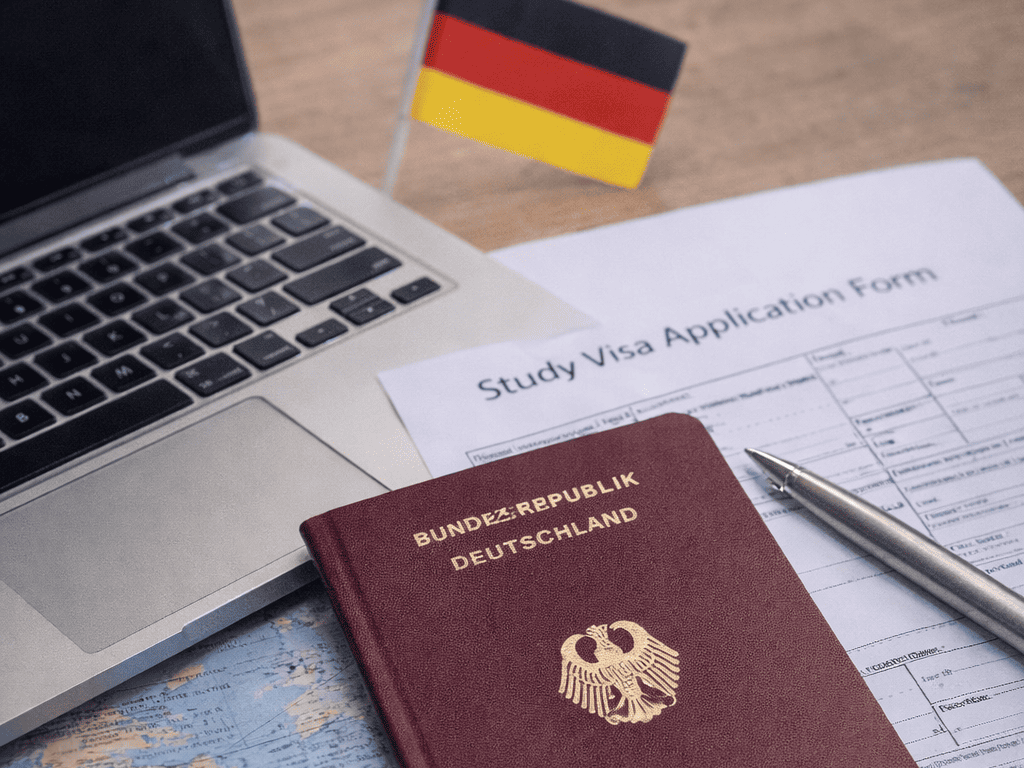
The Germany Ausbildung Visa is one of the key Germany visa types for vocational training in Germany. It is designed for non-EU applicants who want to complete an Ausbildung (vocational training program) and build a career in Germany.
Among all Germany visa types, the Ausbildung visa is especially popular for fields like healthcare, nursing, technical trades, and hospitality. It is issued under Section 16a of the German Residence Act (AufenthG) and allows international trainees to live and train in Germany legally.
To apply for a Germany Ausbildung visa, you must have a confirmed vocational training contract or an admission letter from a recognized training institution. You also need to prove sufficient financial resources through a blocked account or monthly income according to current 2026 requirements. Valid health insurance is mandatory, and in most cases, at least B1 level German language proficiency is required.
For company-based training programs, the Federal Employment Agency reviews the contract to ensure salary and working conditions meet German legal standards.
See More: Complete Germany Ausbildung Visa and Requirements Guide

🇩🇪 Germany Work Visa Requirements
The Germany Work Visa is one of the most important Germany visa types for non-EU skilled workers who want to work legally in Germany. Germany work visa requirements refer to the essential conditions applicants must meet, including professional qualifications, relevant work experience, and a valid job offer from a German employer.
The Germany Work Visa is regulated under the German Residence Act (AufenthG) and is part of Germany’s skilled immigration system designed to attract qualified international professionals.
EU Blue Card Germany
The EU Blue Card Germany is one of the most popular Germany visa types for highly qualified international professionals who want to work in skilled positions in Germany. This residence permit is designed for university graduates and qualified experts who have secured a recognized job offer in Germany.
Among the different Germany visa types, the EU Blue Card is especially aimed at attracting international talent in high-demand sectors such as IT, engineering, healthcare, and science. It is regulated under the German Residence Act (AufenthG) and forms part of Germany’s skilled immigration system.

To qualify for this category of Germany visa types, applicants must meet the minimum salary threshold set annually by the German government. In shortage occupations like IT, engineering, and healthcare, a lower salary requirement may apply.

Germany Job Seeker Visa
The Germany Job Seeker Visa is one of the important Germany visa types for international applicants who want to travel to Germany and search for a job without having a job offer before arrival. This category of Germany visa types allows applicants to stay in Germany for up to six months while looking for employment opportunities.
To qualify for this Germany visa types category, applicants usually need recognized qualifications or professional work experience, proof of financial support, health insurance, and accommodation in Germany. Visa holders cannot take full-time employment during the job search period, but limited trial work or job interviews may be allowed under certain conditions.
Recognition Visa (Qualification Recognition Visa)
The Germany Recognition Visa helps professionals whose qualifications from another country are not fully recognized in Germany.This visa lets them come to Germany to do training join qualification programs or take professional exams.That way they can get their degree or vocational certification fully recognized.Once they get recognition they can change to a skilled worker residence permit.Then they can keep working in Germany.The visa is for professionals who need a few more steps before they can work in Germany.

It supports them in getting their qualifications recognized so they can join the labor market. The Germany Recognition Visa is a pathway, for these professionals.

Family Reunification Visa
The Germany Family Reunification Visa is one of the important Germany visa types for family members of people who already live in Germany or hold legal residence. It allows spouses, children, and in some cases parents to join their family in Germany.
This category of Germany visa types is mainly for maintaining family unity and enabling families to live together legally in Germany.
In most cases, spouses are required to show basic German language skills and provide proof of relationship and financial support to qualify for this visa.
Self‑Employment / Freelance Visa
Germany has a visa for people who want to start their own business in the country. This is really great for people who work with computers like IT professionals and for people who have their companies like startup founders.
Germany also likes to help freelancers and people who are good at creating things like artists and writers. To get this visa you have to show Germany that you have a plan for your business. You have to prove that you have money to take care of yourself.

Germany Opportunity Card (Chancenkarte – 2026 Reform)
The Germany Opportunity Card, also known as Chancenkarte is a way for people to move to Germany. This was started as part of Germanys 2026 Skilled Immigration Reform. The Germany Opportunity Card allows people from outside the European Union who are good at what they do to come to Germany without having a job. They can then look for a job in Germany.
The way the Germany Opportunity Card works is that people get points for things. These things include the kind of job training they have how well they speak languages, the kind of work they have done how old they are and if they have money.
The Germany Opportunity Card is meant to get skilled workers to come to Germany in areas where there are not enough workers. The Germany Opportunity Card is really, about getting skilled workers to move to Germany.
Below are some common questions about Germany Visa Types and residence permits.
Do I need a visa to move to Germany?
If you are a citizen of a country outside the European Union (EU), you will usually need a visa under the category of Germany visa types to enter and stay in Germany for study, work, training, or long-term residence.
Some countries have visa-free entry for short stays, but you still must apply for a residence permit after arrival in Germany if you plan to stay longer.
What are the main Germany visa types for work, study and residence?
The most common Germany visa types for international applicants include:
- Student Visa (for university studies in Germany)
- Ausbildung Visa (vocational training visa)
- Work Visa (for skilled employment)
- EU Blue Card (for highly qualified professionals)
- Opportunity Card (Chancenkarte for job search)
- Job Seeker Visa (for finding employment in Germany)
- IT Specialist Visa (for tech professionals)
- Family Reunification Visa (for joining family members)
Each visa type has different eligibility criteria based on your purpose of stay in Germany.
What is the difference between a visa and a residence permit in Germany?
In the German immigration system:
- A visa allows you to enter Germany
- A residence permit allows you to stay in Germany long-term
After entering Germany with a visa, you must apply for a residence permit at the local Foreigners’ Office (Ausländerbehörde).
How much financial proof is required for Germany visa types in 2026?
Financial requirements depend on the selected Germany visa types, such as:
- Student Visa: approx. €11,904 per year (blocked account requirement)
- Ausbildung Visa: around €822–€959 monthly (depending on training salary)
- Job Seeker Visa: proof of sufficient funds for up to 6 months
💡 The required amount may change depending on German government updates.
Is the German language required for Germany visa types?
Language requirements depend on the visa category:
- Student Visa: depends on course language (German or English)
- Ausbildung Visa: usually B1 German required
- Work Visa: depends on job role and employer
- Family Visa: usually A1 German required
Some IT and international jobs may not require German language skills.
How long does Germany visa processing take in 2026?
Processing time for Germany visa types varies depending on embassy workload and documentation:
- Average time: 4 to 12 weeks
- May take longer if document verification is required
👉 It is recommended to apply early to avoid delays.
Can I stay in Germany after completing my studies?
Yes. After completing your studies in Germany, you can stay for up to 18 months to search for a qualified job.
Once you get a job, you can switch to:
- 💼 Work Residence Permit
- 💳 EU Blue Card
Is health insurance mandatory for Germany visa types?
Yes. Health insurance is mandatory for all major Germany visa types, including:
- Visa approval process
- Residence permit application
- University enrollment
Without valid health insurance, your visa application will not be approved.
What is the visa fee for Germany visa types?
The standard fees are:
- National visa fee: €75 (may vary by country)
- Residence permit fee: up to €100
Exchange rates may affect local payment amounts.
About Germany
Germany is a highly developed European country known for its strong economy, advanced education system, and excellent job opportunities for international workers and students. It is one of the most popular destinations for skilled professionals, vocational trainees, and university students due to its high living standards and career growth options.