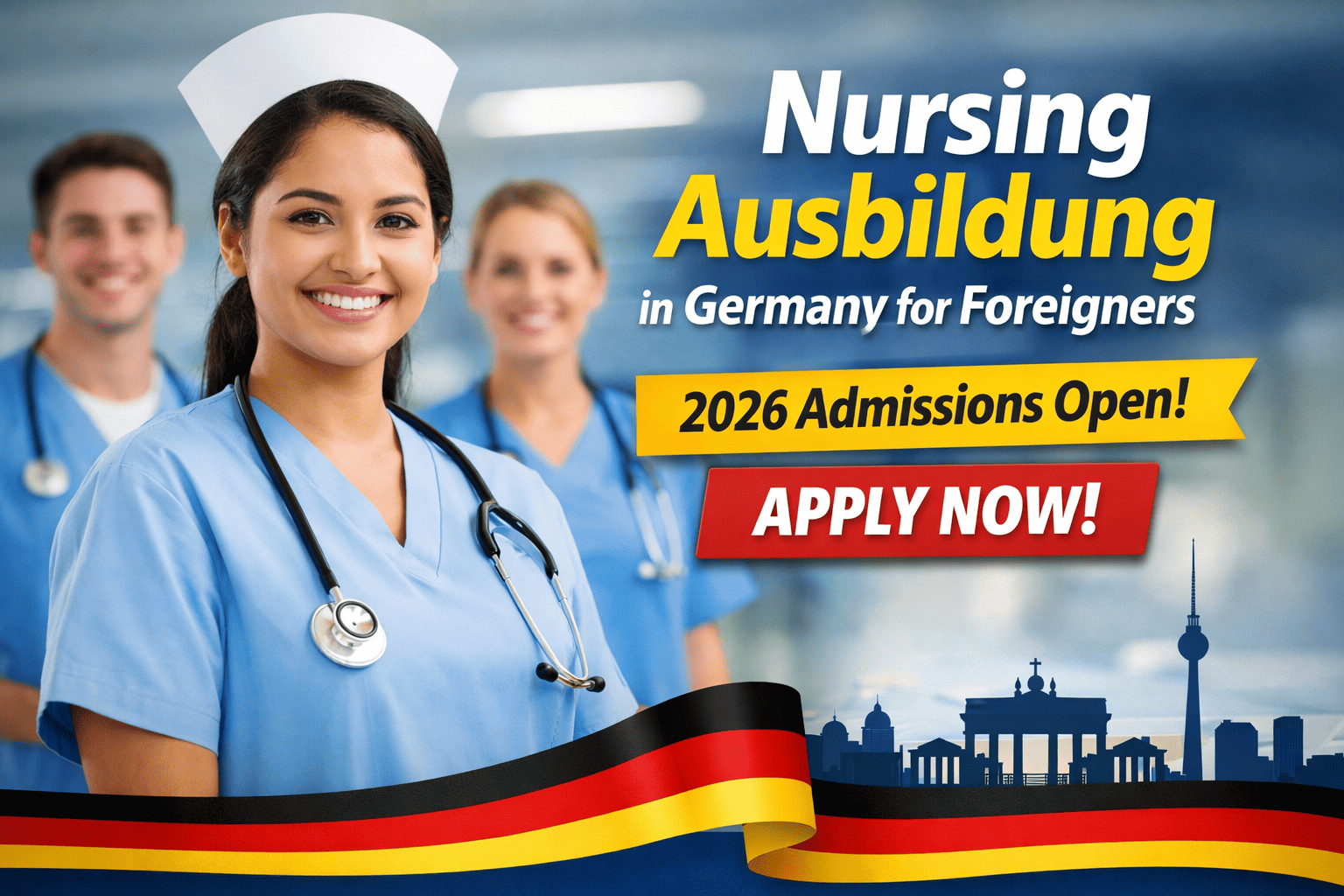
Nursing Ausbildung in Germany for Foreigners, 2026
Introduction
Nursing Ausbildung in Germany for foreigners is one of the best opportunities available in 2026. Germany is facing a serious shortage of qualified nurses, which means international candidates are actively welcomed and supported throughout the process.
Unlike many countries, Germany’s Ausbildung system is a paid training program — meaning you earn a monthly salary while you learn. For foreigners, this creates a unique chance to gain professional qualifications, build a career, and eventually settle permanently in Germany.
This complete guide covers everything you need to know about nursing Ausbildung in Germany for foreigners — from requirements and salary to the visa process and top hospitals hiring right now.
What is Nursing Ausbildung in Germany?
Nursing Ausbildung in Germany is a 3-year paid vocational training program that combines classroom education with hands-on hospital practice. It is officially called Pflegefachmann/Pflegefachfrau training and is recognized across all German states.
During the program, students study nursing theory in a certified nursing school, complete practical training in hospitals and care facilities, receive a monthly salary from the employer, and graduate as a fully qualified registered nurse. For foreigners, this is one of the most accessible pathways into the German healthcare system — no expensive university degree required.
Why Germany Needs Foreign Nurses in 2026
Germany has one of the oldest populations in Europe. By 2030, the country will need over 500,000 additional nurses to meet healthcare demand. Currently there are not enough domestic graduates to fill this gap. German hospitals are actively recruiting internationally, the government has simplified visa rules for healthcare workers, and many hospitals now offer dedicated international nursing programs. For anyone asking can foreigners do nursing Ausbildung in Germany — the answer is a clear yes. Germany not only allows it, they actively encourage it.
Requirements for Nursing Ausbildung in Germany for Foreigners
Educational Requirements
You need a minimum of 12 years of education such as a secondary school leaving certificate, A-levels, or an equivalent qualification. A science background — especially Biology — is preferred. All educational documents must be officially translated into German by a certified translator before submission.
German Language Requirements
German language is the most critical requirement for nursing Ausbildung in Germany for foreigners. You must have at least B1 level, but most hospitals expect B2. Strong language skills are essential because nurses communicate directly with patients, doctors, and hospital staff every day. A certificate from Goethe Institut or TestDaF is accepted.
Age Requirements
There is no strict age limit for nursing Ausbildung in Germany for foreigners. Most successful applicants are between 18 and 35 years old, but older candidates are also welcome as long as they meet all other requirements.
Required Documents Checklist
- Valid passport (minimum 3 years validity)
- Educational certificates (translated + attested)
- CV in Europass format
- Motivation letter (in German)
- German language certificate (B1/B2)
- Health certificate
- Police clearance certificate (from home country)
Additional Requirements
Candidates must be in good physical and mental health, willing to work in shifts including days, evenings, and nights, and have strong communication and empathy skills with a genuine passion for patient care.
For the full documents checklist, also read our guide on Requirements for Ausbildung in Germany.
Top Hospitals Offering Nursing Ausbildung in Germany for Foreigners
Several major hospital groups in Germany have dedicated programs for international nursing candidates. Here are the most important ones:
1. Helios Clinics Group
One of Europe’s largest private hospital networks with 80+ hospitals across Germany. Helios is known for its structured international programs, good training quality, and support for foreign applicants. Headquartered in Berlin under Fresenius with over 100,000 employees — best for beginners with no prior nursing experience. Visit the Helios official careers page to see open positions.
2. Asklepios Clinics
Another major hospital group with locations across Germany. Asklepios regularly recruits international nursing trainees and offers part-time Ausbildung options as well.
3. Sana Kliniken
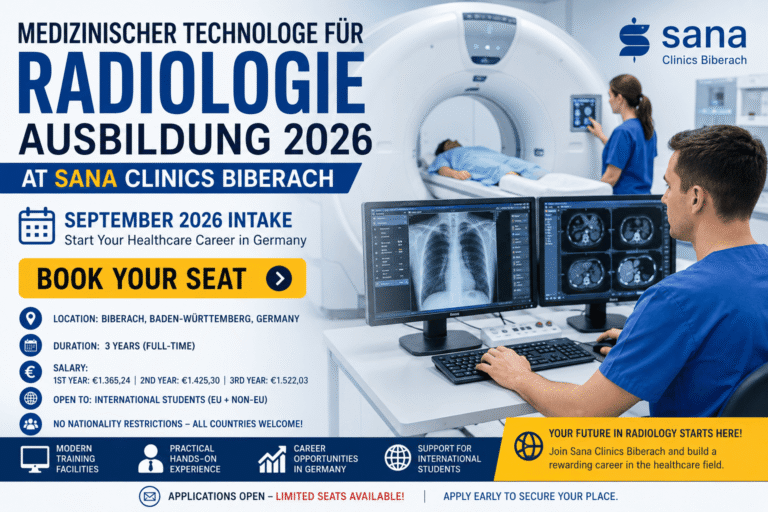
Sana operates hospitals in multiple German cities and welcomes international applications for nursing Ausbildung programs, including specialized fields like radiology technology.
4. DRK Kliniken (German Red Cross)
DRK hospitals are spread across Germany and are particularly known for being foreigner-friendly with supportive onboarding processes.
5. BDH Kliniken
Rehabilitation-focused hospitals that also offer nursing Ausbildung for international applicants. Good option for those interested in long-term patient care.
Pro Tip: Apply to multiple hospitals at the same time to increase your chances. Use our Open Ausbildung Positions page to find current openings.
Salary During Nursing Ausbildung in Germany
One of the biggest advantages of nursing Ausbildung in Germany for foreigners is that it is fully paid. You earn a salary from day one.
Monthly Salary by Year
| Training Year | Monthly Salary |
|---|---|
| 1st Year | €1,100 – €1,200 |
| 2nd Year | €1,200 – €1,300 |
| 3rd Year | €1,300 – €1,400 |
Salary After Completing Ausbildung
| Experience Level | Monthly Salary |
|---|---|
| Newly qualified nurse | €2,500 – €3,200 |
| Experienced nurse (3-5 years) | €3,200 – €4,000 |
| Specialized nurse (ICU, OR etc.) | €3,500 – €4,500+ |
Additional Benefits
Trainees also receive health insurance paid by the employer, 24-30 days of paid annual leave, pension contributions, and some hospitals provide accommodation or a housing allowance.
Duration and Structure of Nursing Ausbildung
Standard Program
The standard nursing Ausbildung runs for 3 years full-time, combining nursing school theory with hospital rotations across different departments.
For Already Qualified Nurses (Recognition Program)
If you already have a nursing degree from your home country, you may qualify for a shorter Recognition Program (Anerkennung) of 6–12 months. This converts your foreign qualification to the German standard, after which you can work as a fully qualified nurse immediately.
Specialization Options During Training
Trainees can specialize in General Nursing, Geriatrics, Intensive Care (ICU), Emergency Room, Pediatrics, Surgery, Anesthesia, or Nephrology.
Step by Step Application Process for Foreigners
Applying for nursing Ausbildung in Germany for foreigners may seem complicated, but following these steps makes it manageable.
Step 1 — Learn German Language
Reach at least B1 level before applying. B2 is better. This is the most important step — without language skills, you cannot communicate with patients.
Step 2 — Prepare Your Documents
Get all certificates translated into German by a certified translator and officially attested. Write your CV in Europass format and prepare a motivation letter in German.
Step 3 — Find Open Positions
Check hospital websites directly, use our Open Ausbildung Positions page, or visit Make it in Germany — the official German government portal.
Step 4 — Submit Your Application
Apply online through each hospital’s careers page, submit all required documents, and apply to multiple hospitals simultaneously to improve your chances.
Step 5 — Interview
Interviews are usually conducted online or via video. Expect questions about your motivation, experience, and German language skills. Be prepared to explain why you want to work as a nurse in Germany.
Step 6 — Receive Training Contract
Once selected, the hospital sends you a signed Ausbildungsvertrag (training contract). This document is required for your visa application.
Step 7 — Apply for Visa
Apply at the German embassy in your country, submit your training contract along with all required documents, and attend the embassy interview.
Visa Process for Nursing Ausbildung in Germany
Getting the right visa is a critical step for nursing Ausbildung in Germany for foreigners. You need an Ausbildung Visa (also called a vocational training visa).
Visa Requirements
- Signed training contract from German hospital
- Valid passport
- Language certificate (B1/B2)
- Proof of educational qualifications
- Health insurance confirmation
- Proof of accommodation in Germany
- Visa application form (completed in German)
How Long Does Visa Processing Take?
The visa process typically takes 6 to 12 weeks. Processing time varies by country and embassy workload. Apply as early as possible after receiving your training contract to avoid delays.
For the complete visa process, read our detailed guide: Ausbildung Visa Germany Requirements
Life in Germany During Nursing Ausbildung
Accommodation
Some hospitals provide free or subsidized accommodation. Others help you find nearby housing. Shared apartments (WG – Wohngemeinschaft) are popular and affordable, with average rent of €400 – €700/month depending on the city.
Monthly Living Costs
| Expense | Estimated Cost |
|---|---|
| Rent (shared apartment) | €400 – €600 |
| Food & groceries | €200 – €300 |
| Transport | €80 – €100 |
| Personal expenses | €100 – €150 |
| Total | ~€800 – €1,150 |
Your Ausbildung salary (€1,100+) comfortably covers these expenses.
Cultural Adjustment Tips
Germans value punctuality — always be on time. Learn basic German phrases for daily life, not just work. Join international communities in your city for support. German winters can be cold, so be prepared.
Career Opportunities After Nursing Ausbildung in Germany
Completing nursing Ausbildung in Germany opens many long-term doors. You can work as a registered nurse in any German hospital, specialize in ICU, OR, or pediatrics, move into nursing management, or pursue further education including a nursing degree or master’s program.
Permanent Residency
After working as a qualified nurse in Germany for 2-4 years, you can apply for permanent residency (Niederlassungserlaubnis), giving you the right to live and work in Germany permanently.
Family Reunification
Once you have a stable job and income, you can bring your spouse and children to Germany through a family reunification visa.
Challenges for Foreign Nurses in Germany
Being honest about challenges helps you prepare better. The main difficulties include the language barrier — German is essential for patient communication — cultural differences in the workplace, the time and cost of document translation and attestation, homesickness from being far from family, and shift work including nights and weekends. All of these challenges are manageable with proper preparation and a supportive hospital environment.
FAQ — Nursing Ausbildung in Germany for Foreigners
What is Nursing Ausbildung in Germany for foreigners?
Nursing Ausbildung in Germany for foreigners is a 3-year paid vocational training program open to international applicants. It combines theory and hospital practice and leads to a fully recognized nursing qualification in Germany.
What are the requirements for nursing Ausbildung in Germany for foreigners?
You need minimum 12 years of education, German language at B1 or B2 level, a valid passport, attested educational documents, and a motivation letter. The full document checklist is listed above in this guide.
Which German level is required for nursing Ausbildung?
Most hospitals require B1 as a minimum for application, but B2 is strongly recommended. Healthcare programs especially require B2 because nurses must communicate clearly with patients and doctors.
How much salary do you get during nursing Ausbildung in Germany?
You earn €1,100 to €1,400 per month depending on your training year. After completing Ausbildung, starting salary is €2,500 to €3,200 per month.
Is nursing Ausbildung in Germany free for foreigners?
Yes, it is completely free. You do not pay any tuition fees. In fact, you receive a monthly salary throughout the 3-year program.
How long does nursing Ausbildung take in Germany?
The standard program is 3 years full-time. If you already have a nursing qualification from your home country, a Recognition Program of 6 to 12 months may be available.
Can I get permanent residency after nursing Ausbildung in Germany?
Yes. After completing Ausbildung and working as a qualified nurse for 2 to 4 years, you can apply for permanent residency in Germany.
What visa do I need for nursing Ausbildung in Germany?
You need an Ausbildung Visa, also called a vocational training visa. You can only apply after receiving a signed training contract from a German hospital.
Can I bring my family during nursing Ausbildung in Germany?
During Ausbildung it is difficult due to the lower salary. After completing training and getting a full-time job with stable income, you can apply for a family reunification visa.
Which hospitals offer nursing Ausbildung for foreigners?
Major hospital groups offering nursing Ausbildung for foreigners include Helios Clinics, Asklepios, Sana Kliniken, DRK Kliniken, and BDH Kliniken. Each has hospitals across multiple German cities.
How do I apply for nursing Ausbildung in Germany as a foreigner?
First learn German to B1/B2, then prepare your documents, find open positions on hospital websites or our Open Ausbildung page, apply online, attend an interview, receive your training contract, and apply for an Ausbildung visa.
How long does the visa process take for nursing Ausbildung?
The visa process typically takes 6 to 12 weeks. Apply as early as possible after receiving your training contract to avoid delays.
Conclusion
Nursing Ausbildung in Germany for foreigners is one of the most rewarding career pathways available today. It offers paid training, a clear career path, long-term job security, and a route to permanent residency in one of Europe’s strongest economies.
The process requires preparation — especially German language learning — but with the right steps, thousands of international candidates successfully make this journey every year. Start today: learn German, prepare your documents, and explore open positions. Your nursing career in Germany can begin now.
For related reading:
- Open Ausbildung Positions in Germany
- Ausbildung Visa Germany Requirements
- Complete Guide to Ausbildung in Germany
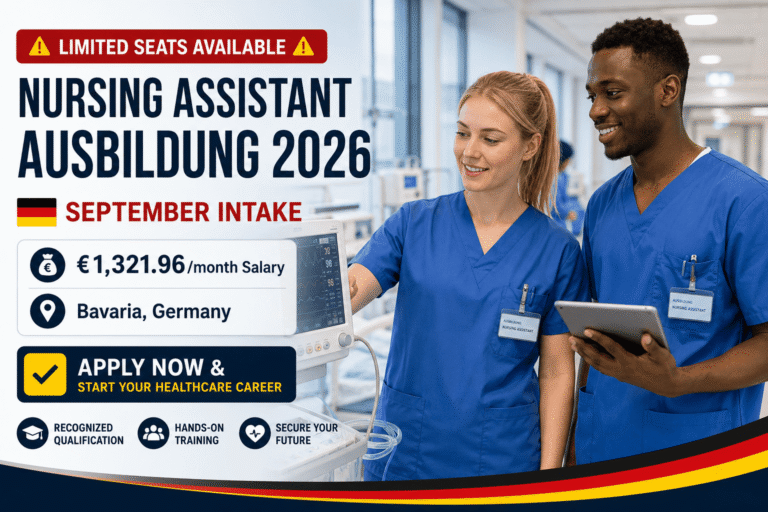
- Nursing Assistant Ausbildung at Rummelsberg Hospital
About the Author


Hello my name is Jeremiah,and I would wish to do nursing ausbuildung from July or August intake.
I am passionate about caring for the sick and sincerily looking forward to your response.
Much regards
Bonjour ,je suis Esther Adonis et je souhaiterais suivre une formation en infirmiere avec vous .je parle français ,creole ,espagnol et je suis en train d’etudier l’anglais