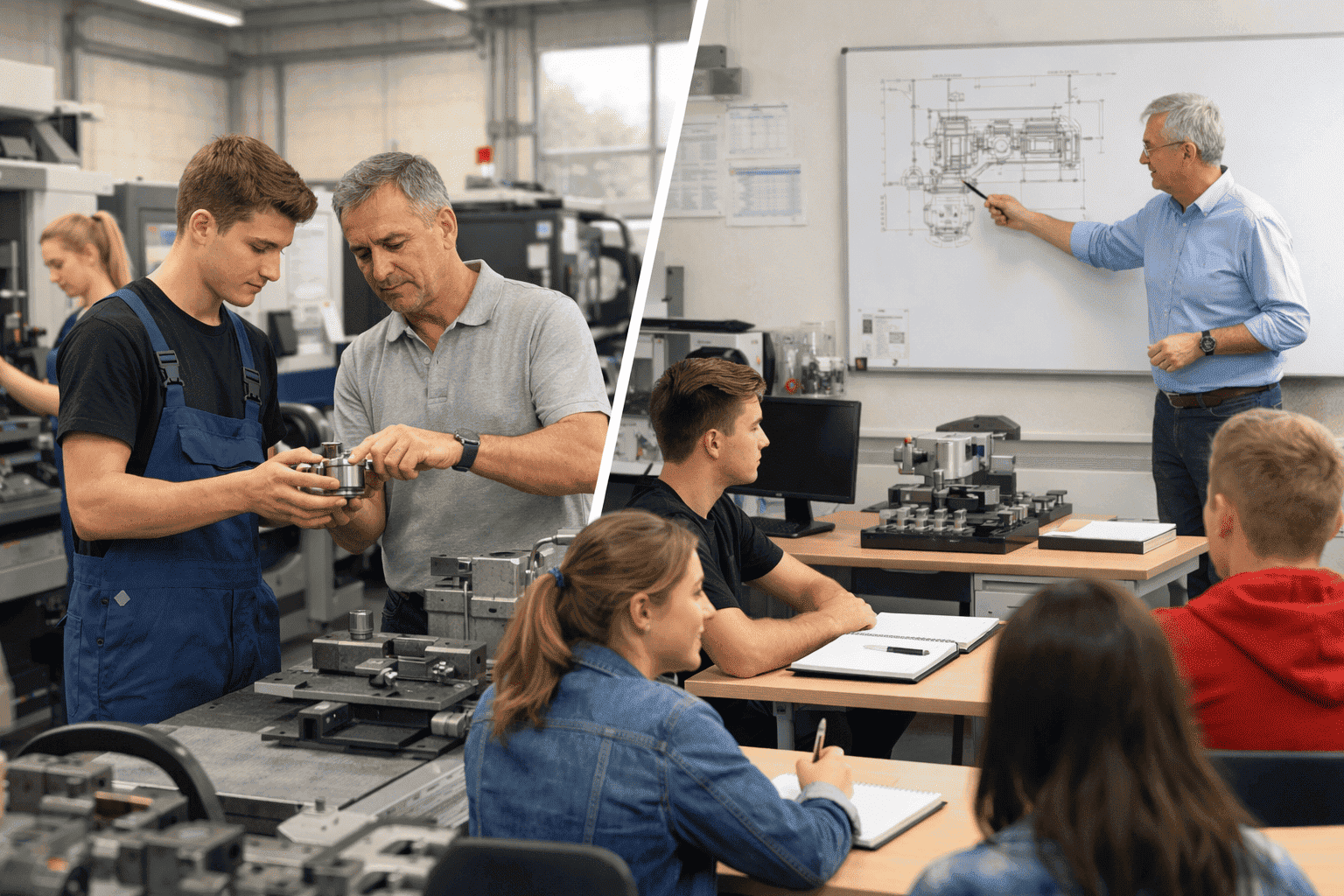
Dual Ausbildung in Germany combines company work experience with vocational classroom learning
Explain
Dual Ausbildung in Germany is the one and the best career option for those students who want learn practical skills, paid training and a stable future. This vocation training system in germany allows to students to work in a real company and study in a vocational school at the same time.
In 2026, Dual Ausbildung in Germany is becoming more popular and in demanding because Germany needs skilled workers in many fields. Both means local German and international students can apply for this vocational training program in Germany.
This guide explains what Dual Ausbildung is and how it works in Germany. It covers training structure, monthly salary, eligibility requirements, and duration in detail. You will also learn about the main benefits of Dual Ausbildung, popular fields, and job opportunities after completion, including career growth and future options in Germany.
What Is Dual Ausbildung in Germany?
Dual Ausbildung in Germany vocational training system in Germany that combines work practical experience with classroom education. It is called “dual” because learn students in two different places at the same time.
- A company – where students work and learn practical job skills
- A vocational school (Berufsschule) – where students study job‑related theory
This system students helps learn, work, and earn together.
In a Company Learning Practical Training
In Dual Ausbildung, students work in a real German company. This is the most important part of the training.
At the company, students:
- Work under experienced trainers
- Learn real job tasks step by step
- Use tools, machines, or systems related to their profession
- Follow work rules, safety rules, and daily schedules
- Gain real work experience, not just observation
Students do not just watch others. They actively work, practice skills, and slowly become confident in their job.
This students practical training prepares for real employment after Ausbildung.
Vocational School Learning Berufsschule
Along with work company students also attend a vocational school called Berufsschule.
In vocational school, students learn:
- Basic theory related to their profession
- knowledge Technical needed for the job
- rules Safety and workplace laws
- teamwork Communication and responsibility
- Exams Preparation and final assessments
Subjects are job‑focused, not general. Students do not study unnecessary topics.
Everything taught in school supports the work done in the company.
How the Dual System Works Together
The real strength of Dual Ausbildung in Germany is the connection between theory and practice.
- What students learn in school → they apply in the company
- What they do at work → they understand better in class
This balance makes learning easy, practical, and effective.
Usually:
- 3–4 days per week → company training
- 1–2 days per week → vocational school
Because of this system, students become job‑ready before finishing their training.
What is Dual Ausbildung Salary in Germany 2026
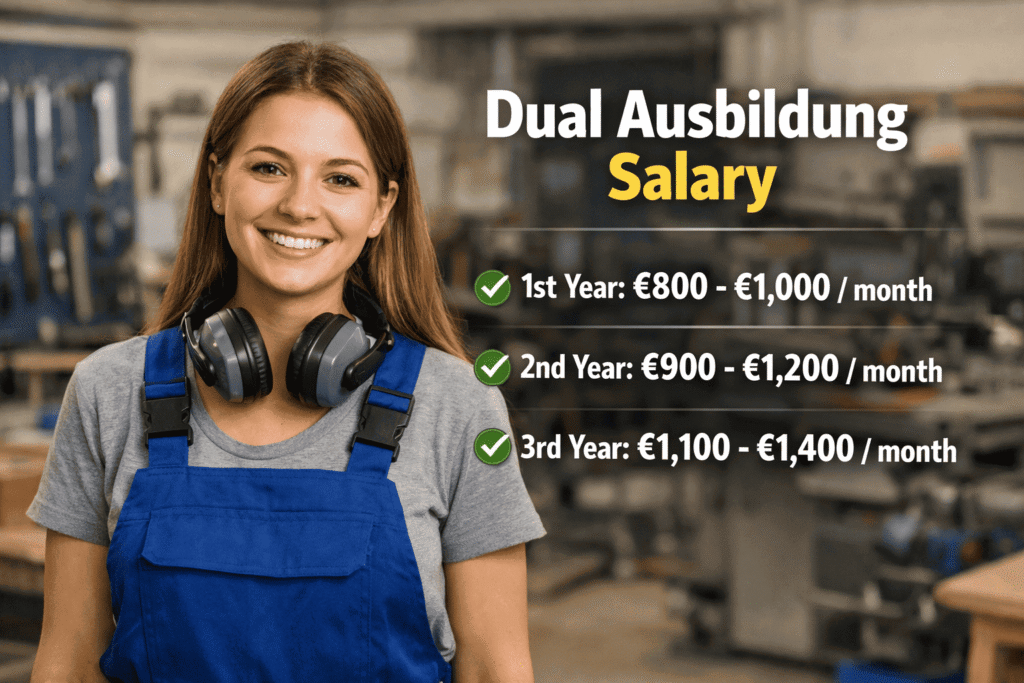
One big advantage of Dual Ausbildung in Germany is paid training.
Salary Depends On
The salary Dual Ausbildung in Germany during is not the same for every student. It depends on several important factors. these Understanding factors helps students choose the right field and location.
Job Field
The job field plays the biggest role in salary.
Some professions pay more because Germany has a high demand for skilled workers.
- Technical fields (electrician, mechatronics, mechanics) usually offer higher pay
- IT and software Ausbildung pays well due to skill shortages
- Healthcare nursing jobs and medical assistance also offer good salaries
City and Location
The city region also affects salary.
- like Big cities Berlin, Munich, Frankfurt, and Hamburg often pay more
- costs Living are higher in large cities, so salaries are adjusted
- Smaller towns may pay slightly less but have lower living costs
Students should balance salary with rent and daily expenses.
Company Size
The company size of the matters a lot.
- companies Large usually offer higher salaries and better benefits
- Medium companies provide stable pay and good training
- Small companies may pay less but still offer valuable experience
Well‑known companies often follow official salary agreements, which means fair pay.
High‑Paying Fields
In general, the highest paying Dual Ausbildung fields include:
- IT & Software
- Engineering & Technical trades
- Healthcare & Nursing
These fields offer strong income growth after training as well.
Requirements for Dual Ausbildung in Germany
The requirements for Dual Ausbildung in Germany are simple and flexible. They are slightly different for German students and international students, but the system is open to learners of different ages and backgrounds.
For German Students
German students usually need the following:
- Minimum age:
There is no strict upper limit age .
Most students between start 16 and 18 years but older students can also apply. - School certificate:
A basic school qualification such as:- Hauptschule
- Realschule
- in the Interest field:
should Students have a interest clear in the profession they choose. - Willingness to work learn:
Ausbildung Dual requires discipline teamwork, and responsibility.
Many start Germans Ausbildung after 20 or even 25 years especially if they careers change .
For International Students
International students can also apply for Dual Ausbildung in Germany if they meet these requirements:
- Secondary school education:
A school certificate equivalent to German secondary education. - German language skills:
Usually A2 to B1 level German is required.
Some professions may ask for B1 level. - Ausbildung contract:
A signed training contract from a German company is mandatory.
Popular Dual Ausbildung Fields in Germany

Dual Ausbildung in Germany is available in many fields.
IT & Software
Students learn:
- Software development
- IT support
- System administration
High demand and good salary.
Engineering & Technical Trades
Includes:
- Electricians
- Mechanics
- Industrial technicians
Strong job security.
Healthcare
Includes:
- Nursing
- Medical assistants
High demand and PR chances.
Hospitality
Includes:
- Hotel management
- Cooking
- Customer service
Good for service‑oriented students.
Automotive
Germany’s car industry offers:
- Mechatronics
- Vehicle technology
Strong career growth.
Logistics
Includes:
- Warehouse management
- Supply chain work
Many job opportunities.
Benefits of Dual Ausbildung
Dual Ausbildung in Germany offers many advantages.
No Tuition Fees
Most programs are free or very low cost.
Strong Job Security
Many students get jobs in the same company.
Real German Work Experience
Students gain international work exposure.
Easy Job Market Entry
Employers trust Dual Ausbildung qualifications.
Dual Ausbildung vs University Study in germany
| Dual Ausbildung | University |
|---|---|
| Paid training | High tuition fees |
| Practical skills | Mostly theory |
| Job‑focused | Academic focus |
| Early career start | Longer study time |
For practical careers, Dual Ausbildung in Germany is a better option.
Job in the Same Company
Many students get a full‑time job in the same company where they completed their Dual Ausbildung.
- Companies train students according to their own work needs
- Trainees already understand company rules and systems
- prefer hiring Employers trained apprentices to save time and cost
this Because a number large of students receive a job offer immediately after completion. This makes Ausbildung Dual in germany a safe and stable career option.
18‑Month Job Search Permit
International students who complete Dual Ausbildung in Germany can apply for an 18‑month job search residence
permit.
This permit allows students to:
- Stay legally in Germany after training
- Search for a suitable full‑time job
- Work during the job‑search period
This extra time reduces stress and gives students a real chance to find the right job in their field.
Residence Permanent in Germany
After getting a full‑time job, students can start their Residence Permanent journey.
- After 2 to 3 years of full‑time work, students can apply for PR
- A stable job and social contributions are required
- German language skills help in PR approval
Permanent Residence allows:
- Long‑term stay in Germany
- Job freedom
- A secure future
Clear Settlement Pathway
Dual Ausbildung in Germany offers a step‑by‑step settlement path:
- Ausbildung training
- Full‑time job
- Work residence permit
- Permanent Residence
This makes structure clear Dual Ausbildung one of the best options for international students who want long‑term stability in Germany.
Is Ausbildung Dual in germany Worth It in 2026?
Yes, Dual Ausbildung in Germany is worth it because:
- Germany needs skilled workers
- Education is affordable
- Job demand is high
- PR options are clear
- Career growth is stable
It is a smart choice for students who want security.
Major Institutions Offering Ausbildung in Germany (Overview)
In Germany, Ausbildung is not offered by just one organization. Many companies, institutions, and official bodies work together to support the Ausbildung system. These institutions provide students with practical training, education, and officially recognized certifications.
The main focus of this article is to explain the Dual Ausbildung system, its requirements, benefits, and career outcomes. Information about which companies and institutions offer Ausbildung in Germany will be explained step by step in separate detailed articles.
If we include full details of every company and institution here, the article would become too long and the main topic could lose focus. That is why this section provides only a brief overview.
👉 In upcoming articles, we will cover:
- Top German companies offering Ausbildung
- Company‑wise Ausbildung programs
- Requirements, salary, and career scope
- Step‑by‑step application process for each institution
FAQ – Dual Ausbildung in Germany
Is Dual Ausbildung paid?
Yes, Dual Ausbildung in Germany is paid.
receive Students a monthly salary from the company during their period. training
- Salary increases every year
- Students can manage living costs
- No tuition fees are charged
This makes Dual Ausbildung a financially supportive option for students.
Can international students apply for Dual Ausbildung in Germany?
Yes, international students can apply for Dual Ausbildung in Germany.
To apply, they must:
- Meet education requirements
- Have basic German language skills
- Secure an Ausbildung contract from a company
Germany welcomes skilled learners from many countries because of worker shortages.
What German language level is required?
The required German level is usually A2 to B1.
- Most companies prefer B1 level
- Some fields may accept A2 with improvement during training
- Good German helps in work, school, and daily life
Learning German increases job and visa approval chances.
Is Dual Ausbildung better than university?
For practical and job‑focused careers, yes.
Dual Ausbildung is better because:
- Students gain real work experience
- They earn money while learning
- Job chances are higher after completion
University study is more theory‑based, while Dual Ausbildung focuses on skills and employment.
Is there age limit for Dual Ausbildung in germany?
No there no is maximum age limit.
- Many students start after 20 or 25
- Career‑change students are welcome
- Motivation matters more than age
Germany values skills, not age.
Can students get a job after Dual Ausbildung?
Yes, many students get a job in the same company.
- Companies prefer trained apprentices
- Job transition is smooth
- Long‑term career growth is possible
Does Dual Ausbildung lead to Permanent Residence (PR)?
Yes, Dual Ausbildung offers a clear path to PR.
Stable future in Germany
Full‑time job after training
PR possible after 2–3 years of work
Conclusion
Dual Ausbildung in Germany is a powerful career pathway in 2026. It offers paid training, real work experience, and strong job security. Students learn skills that companies really need.
If you want to learn, work, earn, and settle in Germany, Dual Ausbildung in Germany is one of the best options today.
Know more about Ausbildung in Germany so this more ausbildung in germany explanation reads.
on the other Option for international students is study in Germany. Read More dual ausbildung in Germany
About the Author

4 thoughts on “Dual Ausbildung in Germany | Dual Vocational Training Requirements”